The End of Range Anxiety: Renault’s 1,400 km Electric Vision


I talk to a lot of people about switching to electric vehicles, and the conversation almost always hits a brick wall at the exact same phrase: “Range anxiety.” I completely get it. The idea of being stranded on a long road trip with a dead battery is stressful. But when I was digging into Renault’s latest tech announcements this morning, I realized the transition to electric mobility is about to take a highly practical, fascinating detour.
Renault just unveiled their new RGEV Medium 2.0 platform, and it promises a staggering 1,400 kilometers of range. We aren’t just talking about strapping a massive, heavy battery to a chassis. We are looking at a brilliant compromise that might just be the bridge we need. Let me break down why I think this is a massive deal for the industry, and more importantly, for everyday drivers.
What Exactly is the RGEV Medium 2.0?
If you follow EV trends, you know that the race has mostly been about who can build the biggest battery. But big batteries are heavy, expensive, and resource-intensive. Renault is taking a different route.
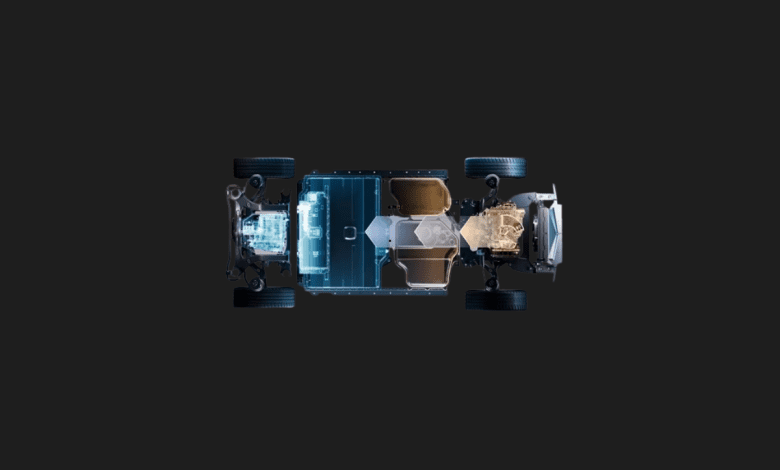
The RGEV Medium 2.0 is an EV-first architecture designed primarily for compact and mid-size models (C and D segments). However, its party trick is that it allows for a range-extending internal combustion engine (ICE).
To be clear, this isn’t a traditional hybrid where the gas engine drives the wheels. In this setup, a small combustion engine acts purely as an onboard power generator. It quietly charges the battery while you drive, allowing you to maintain the smooth, instant-torque feel of an EV, but with a range that rivals long-haul diesel engines.
The Numbers That Blew My Mind

When I looked at the spec sheet, a few metrics immediately stood out. Renault isn’t playing small here:


- 750 km Pure Electric Range: Even without the gas generator running, models built on this platform are targeting up to 750 kilometers of range on a single charge (based on WLTP standards). That alone is top-tier.
- 1,400 km Total Range: When the range extender kicks in, you can theoretically drive across entire countries without stopping for anything other than a coffee break.
- Ultra-Low Emissions: Renault is aiming for CO2 emissions to stay under 25 grams per 100 kilometers.
- 800-Volt Architecture: This is huge. For models hitting the European market from 2028 onwards, this high-voltage system means you can gain a massive amount of range with just a 10-minute fast charge.
- Heavy Duty: AWD options and a solid 2-ton towing capacity. Finally, an EV platform that can actually pull a decent-sized trailer!
Why Range Extenders Make Perfect Sense Right Now
I’ve always believed that the jump from pure gasoline to pure electric is too sharp for current global infrastructure. Range extenders are making a major comeback because they solve the immediate infrastructure problem while keeping the driving experience electric.
This reminds me heavily of Renault’s alliance partner, Nissan, and their “e-Power” technology. I actually had to laugh when I remembered the bureaucratic chaos Nissan’s e-Power caused recently in Turkey. The tech was so unconventional that local authorities didn’t know how to classify it. Owners literally had to go to public notaries to have their vehicle registrations updated from “Electric” to “Gasoline (NOVC-HEV)” because the system couldn’t compute a car that drives on electricity but drinks gasoline to make it. It just goes to show that the technology is moving much faster than the paperwork!
The Return of the Minivan?

Because the RGEV Medium 2.0 is modular, it isn’t just for SUVs and sedans. Renault hinted that this architecture could spark the return of the minivan.
They referenced the futuristic Renault R-Space concept from a few years ago as inspiration for upcoming family vehicles. I would personally love to see a revival of the spacious, highly practical family cruiser, especially if it comes with the torque of an EV and a 1,400 km range.
The Financial Reality Behind the Tech
Behind all the flashy range numbers, there is a very grounded business reality here. By utilizing this new platform, Renault expects to cut development costs by up to 40%.
The C and D segments already make up about 30% of Renault’s total sales. By dramatically reducing how much it costs to build these cars, European automakers might finally have a solid strategy to combat the incoming wave of highly affordable Asian EVs. Cheaper production costs should, in theory, mean more accessible price tags for us as consumers.
Final Thoughts
I look at the RGEV Medium 2.0 and I see pragmatism. We all want a zero-emission future, but we also want cars that fit seamlessly into our current, imperfect lives. A vehicle that gives you 750 km of clean electric driving for your daily commute, but has a gas generator backup so you can drive 1,400 km across the continent without checking a charging map? That sounds like the ultimate sweet spot to me.
I’m curious where you stand on this transition phase. If you were buying a new car tomorrow, would you insist on a 100% pure electric vehicle, or does the safety net of a 1,400 km range extender sound like the smarter choice? Let me know what you think in the comments!
You Might Also Like;